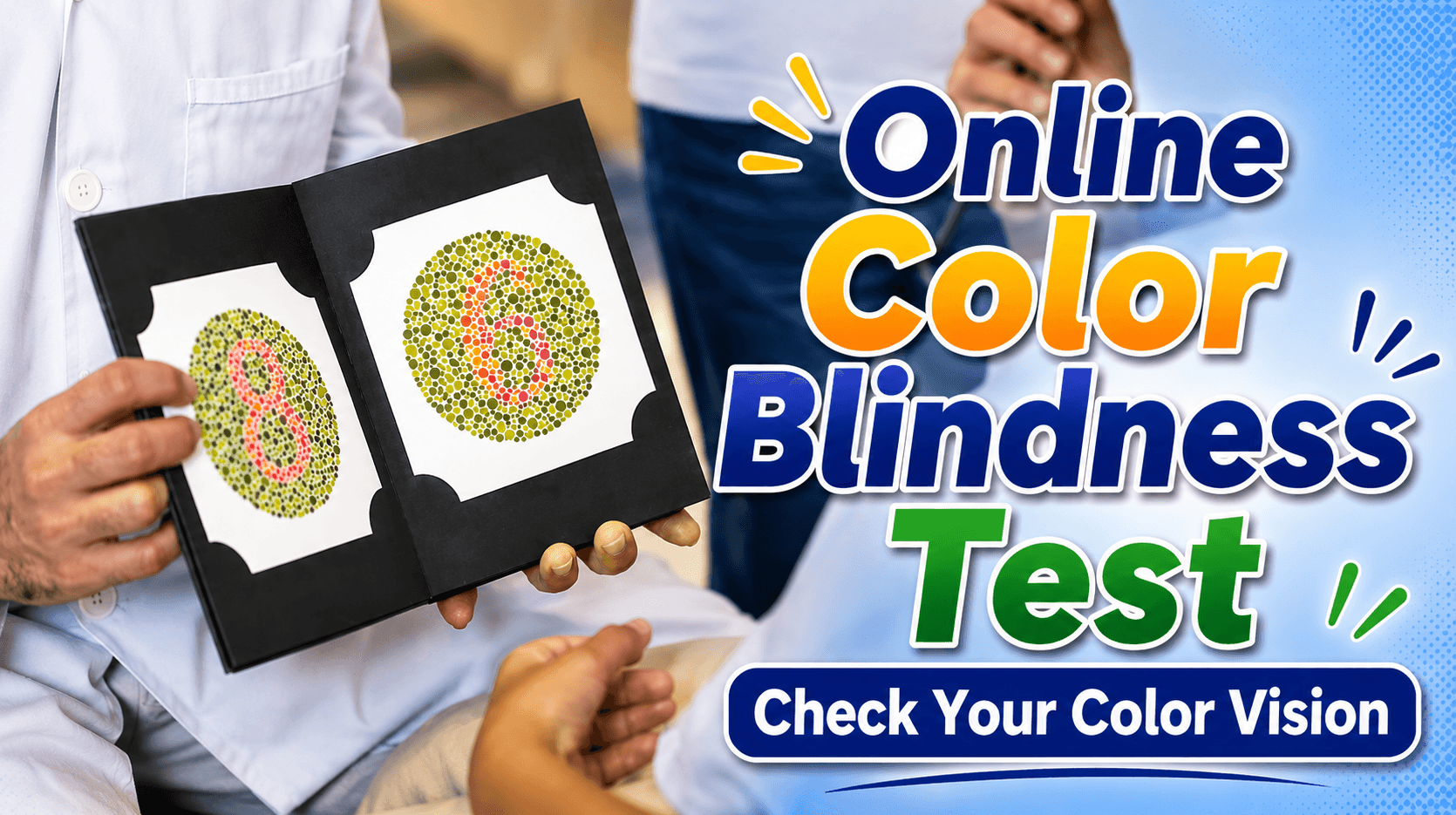
Online Color Blindness Test: Check Your Color Vision
A Color Blindness Test is a simple way to check your color vision and identify possible color vision deficiency. It helps detect difficulty in distinguishing colors such as red, green, or blue, which may affect everyday activities.
Many people are born with this condition without realizing it. On this page, you'll learn about the types, causes, symptoms, and treatment of Online Color Blindness Test, along with different color vision tests and how to take them to understand your results.
What Is Color Blindness?
Color blindness is a condition that makes it hard to tell the difference between certain colors. It is also called the color vision test. Some people have trouble seeing red, green, or blue correctly, while others may not see any colors at all. There are different types of this condition. Protanopia affects red color vision, deuteranopia affects green color vision, and tritanopia affects blue color vision.
Some people have dichromacy, which often causes red-green vision problems. Others may have achromatopsia, a rare condition where no colors can be seen.Around 300 million people worldwide have this condition, which is about 4% of the global population. It is much more common in men than in women. About 1 in 12 men and 1 in 200 women are affected, meaning nearly 95% of people with this condition are male.
How To Take A Color Blind Test
Follow these simple steps to check your color vision:
Click the Start Test button on the homepage.
Look at each image carefully and choose the correct answer from the given options.
Complete all the questions without skipping any.
When the test is finished, you'll see your results, including your color vision accuracy and overall performance.
If available, click the Download Certificate button to save or print your test certificate.
Different Types Of Color Blindness Test
There are several types of color blindness tests available to check color vision and identify different vision deficiencies.
Ishihara Test-Look at each colored plate and identify the number hidden in the dots. Enter the number you see and complete all 14 plates.
Farnsworth 100 Hue Test- Arrange the colored chips in the correct order from the lightest shade to the darkest. Your score is shown after you finish.
Reaction Time Test- Click on the colored objects as quickly as possible before they disappear. Your fastest average response time is recorded.
Red-Green Test- Find the gap in the red letter C shown on a green background and select the correct direction using the arrows.
Kids Test- This test works like the Ishihara test but uses simple shapes instead of numbers, making it easier for children to complete.
Farnsworth Lantern Test- Look at the blinking lights and choose the colors you see at the top and bottom.
Army Test- Identify the numbers shown on 15 color plates to check whether your color vision meets military requirements.
Color Personality Test- Answer a series of questions about your behavior to discover your personality color and traits.
Color Blindness Test Glasses And Lenses
Although there is no cure, specially designed glasses and contact lenses can help some people see colors more clearly. These products are made to support people with color vision tests in their daily lives. They use tinted filters to improve the way certain colors appear. This can make everyday tasks and some jobs easier.
Different types of glasses and lenses are available based on the type of color vision deficiency. Before buying a pair, it is important to know which type you have. You can find this out by taking a color vision test. Brands like EnChroma offer different options to match different needs.
What Causes Color Blind test?
Color blindness can be either congenital (present from birth) or acquired (develops later in life).
Congenital
This type is inherited from parents through genes. The affected gene is found on the X chromosome, which is why it is more common in men than in women. People born with this condition usually have it for life.
Acquired
This type develops later because of certain health conditions, medicines, or other factors. Common causes include:
Aging and damage to the retina
Eye diseases such as glaucoma and macular degeneration
Health conditions like diabetes, high blood pressure, and Parkinson's disease
Head or eye injuries
Certain medicines, including sildenafil, ethambutol, and hydroxychloroquine
Vitamin A deficiency
Long-term exposure to UV rays, strong sunlight, or lasers
If you notice changes in how you see colors, taking a color blind test can help identify the problem and determine whether further eye care is needed.
What Are The Symptoms Of Color Blindness?
Color blindness mainly affects how a person sees and identifies colors. Common symptoms include:
Difficulty telling the difference between certain colors, such as red and green or blue and yellow.
Colors appear less bright or more faded than usual.
Trouble recognizing different shades of the same color.
Difficulty identifying colors in charts, signs, or everyday objects.
In many cases, the symptoms are mild, so people may not realize they have a color vision deficiency until they take a color blind test.
In rare or severe cases, some people may also experience involuntary eye movements or increased sensitivity to light.
FAQs
How Can You Check For Color Blindness?
You can look for common symptoms or take tests such as the Ishihara Test or the Farnsworth 100 Hue Test. You can also take an online color vision test to check how well you identify different colors and detect any color vision deficiency.
What Colors Can People With Color Vision Deficiency See?
The colors a person sees depend on the type of condition they have. Some people have trouble telling red and green apart, while others may have difficulty with blue and yellow. In rare cases, a person may see very little or no color at all.
Can You Correct The Color Vision Test?
There is no cure for inherited cases. However, specially designed glasses and contact lenses can help some people distinguish certain colors more easily and improve color perception in daily activities.
Can Color-Blind People Drive?
Many people with mild color vision deficiency can drive safely. They often rely on the position and brightness of traffic lights instead of color alone. However, driving rules vary by country, and some people with severe vision problems may face restrictions.